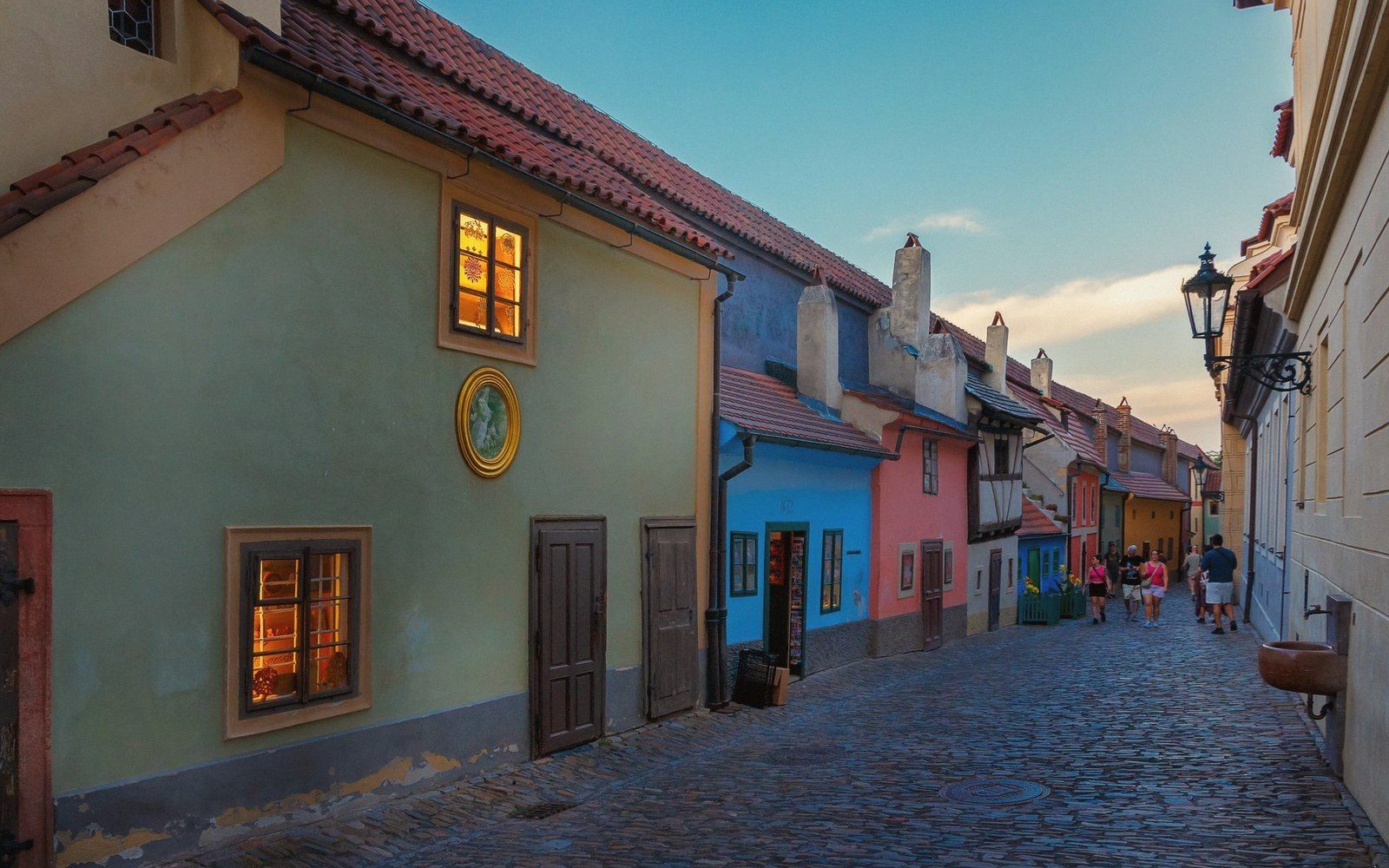
A rented room above a medieval lane, a winter of short prose, and a location that has since been worked into legend.
The Facts of the Winter
In the autumn of 1916, Kafka's younger sister Ottla rented a small house at No. 22 Zlatá ulička — Golden Lane — within the precincts of Prague Castle. She used it as a studio of sorts, and Kafka borrowed the space to write in the evenings, away from the noise of the family apartment on Altstädter Ring. He worked there through the winter and into the spring of 1917, on foot from his lodgings, returning home late.
What he wrote in those months is not in doubt. The period at Zlatá ulička produced a significant cluster of short prose pieces, many of which Kafka himself collected in Ein Landarzt (A Country Doctor), published in 1919 and dedicated to Kafka's father. Among them: "Ein Bericht für eine Akademie," and several of the parables that resist any single reading. The work is compressed, strange, and assured — a different pressure from the unfinished novels.
Kafka's own diary entries and letters from this period confirm the arrangement and his sense of the room as genuinely useful. He described the evening walk and the privacy of working in a space that was not an apartment he shared with his parents. That is the substance of what is known.
The Mythology That Grew Around It
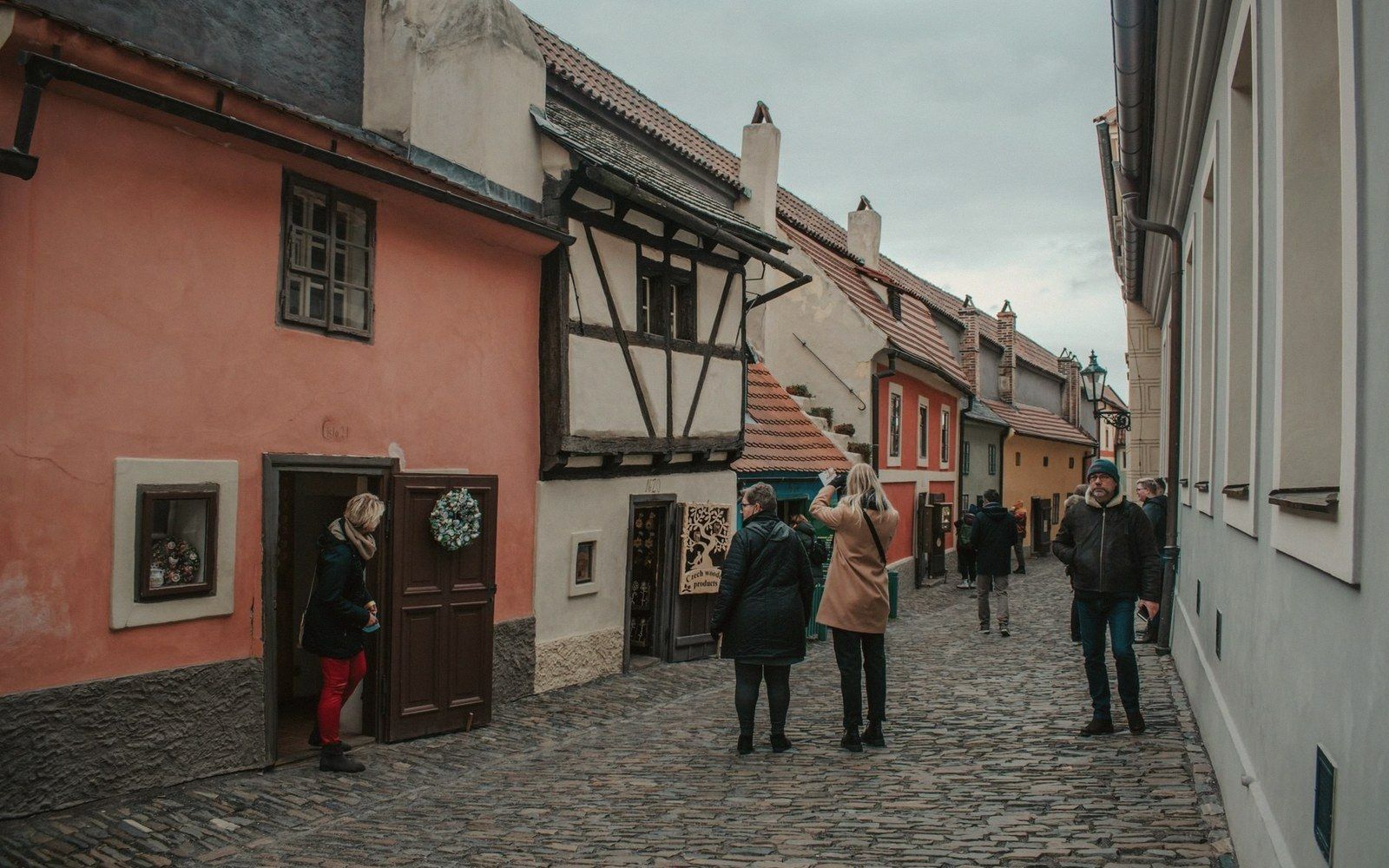
Golden Lane is a lane of tiny houses built into the Castle's northern wall, once occupied by castle workers and later by various tenants. It is now among Prague's most visited sites, and No. 22 is marked for tourists. The problem is the myth that has settled around it: the notion of a brooding genius in a fairy-tale alley, composing parables in a kind of visionary isolation, the Castle looming directly overhead.
The room was a practical solution to a practical problem — noise, crowding, the difficulty of writing in the city he could never quite leave. The location's picturesque quality is real, but it was incidental. The winter at Zlatá ulička matters for what it produced, not for what it looks like.
End of article · Prague