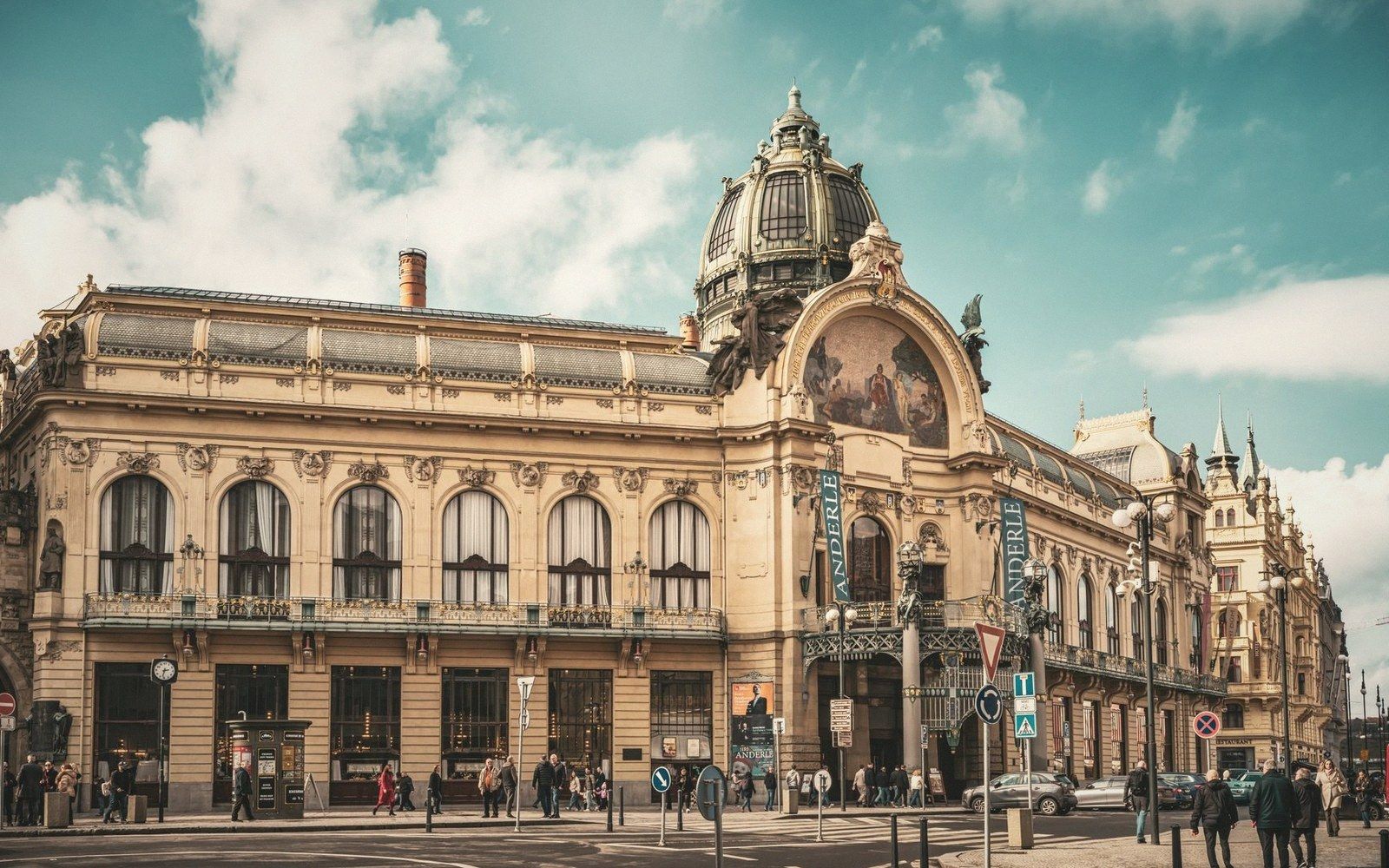
The Workmen's Accident Insurance Institute was not a Kafkaesque metaphor. It was where Kafka spent most of his waking life.
The Institute and the Work
The Arbeiter-Unfall-Versicherungs-Anstalt für das Königreich Böhmen — the Workmen's Accident Insurance Institute for the Kingdom of Bohemia — was a public body established under the Habsburg social insurance legislation of the 1880s. Its mandate was practical and unglamorous: to assess the accident risk of industrial and commercial workplaces, levy premiums accordingly, process injury claims, and enforce employer compliance. Kafka joined it in July 1908, two years after taking his law doctorate at the German University in Prague, having spent an unhappy trial period at Assicurazioni Generali, an Italian insurance firm where the working hours were punishing and the prospect of advancement remote.
The Institute suited him better, at least structurally. It was a semi-governmental agency serving a Czech-majority population, staffed largely by German-speaking officials — a characteristic Prague arrangement in the late imperial period. The work engaged Kafka's legal training directly. He became a skilled assessor, rising from Aushilfe (temporary assistant) to Concipist, then to higher grades over the course of his career. His written reports were lucid and, by institutional standards, well crafted. His superiors regarded him as a capable official; he received promotions and commendations. The work was real, and he did it seriously.
What he actually did, day to day, was assess industrial hazards. He inspected quarries, mills, sawmills, and construction sites, wrote reports on their accident rates, and argued for reclassification of risk categories in cases where employers contested their premiums. He also helped develop and publicise worker safety measures, and some of his official publications — on accident prevention in quarrying operations, for instance — survive and have been studied. The Institute was not a surrealist maze; it was a functioning bureaucracy doing administrative work that had concrete consequences for injured workers and their families.
The Hours and What Was Left
The critical practical fact of Kafka's working life was the shift system. When he first joined, the standard office day ran until two in the afternoon — the so-called Einspänner, or single-span day, a schedule common in Austro-Hungarian civil administration. This was, for Kafka, a genuine gift. It left the afternoon and evening for writing.
That gift proved less generous than it first appeared, because the office still took the best part of his day. Even with work ending in the early afternoon, he was often left with little energy for anything else. His diary entries and letters from these years return repeatedly to the problem this created — not the work itself, which he could tolerate, but the condition in which it left him. After a full day at the Institute, he described arriving home depleted, capable of eating dinner, perhaps reading, but not of producing the concentrated, sustained state that fiction required of him. The evening hours were not simply shorter; they were of a different quality.
He wrote at night. The pattern he settled into, and which he described most clearly during the composition of Das Urteil (The Judgement) in September 1912 — a story written in a single night, an experience he recorded in his diary with genuine exhilaration — was to begin after the household had gone to sleep, work until two or three in the morning, and rise for the office a few hours later. This was not romantic self-mythologising; the diaries make plain the exhaustion and the cost. It was simply the available time.
The years of most sustained literary output — the autumn of 1912, which produced both Das Urteil and the opening chapters of what became Der Verschollene, and the extended stretch of work on Der Proceß in 1914 — coincided with periods when office hours were manageable or when he had taken sick leave. The correlation is not incidental. When the Institute's demands increased, or when his health declined, the writing slowed or stopped. The relationship between employment and literary production was not symbolic; it was logistical.
Kafka applied for early retirement several times before tuberculosis made the decision for him. He left the Institute in 1922, having worked there for nearly fourteen years. He was not, in those years, a writer who happened to hold a day job. He was an official who happened, in the hours the job did not own, to be writing some of the most consequential fiction of the twentieth century. The distinction matters: it keeps the work tethered to the actual texture of his life rather than dissolving it into legend.
End of article · Prague