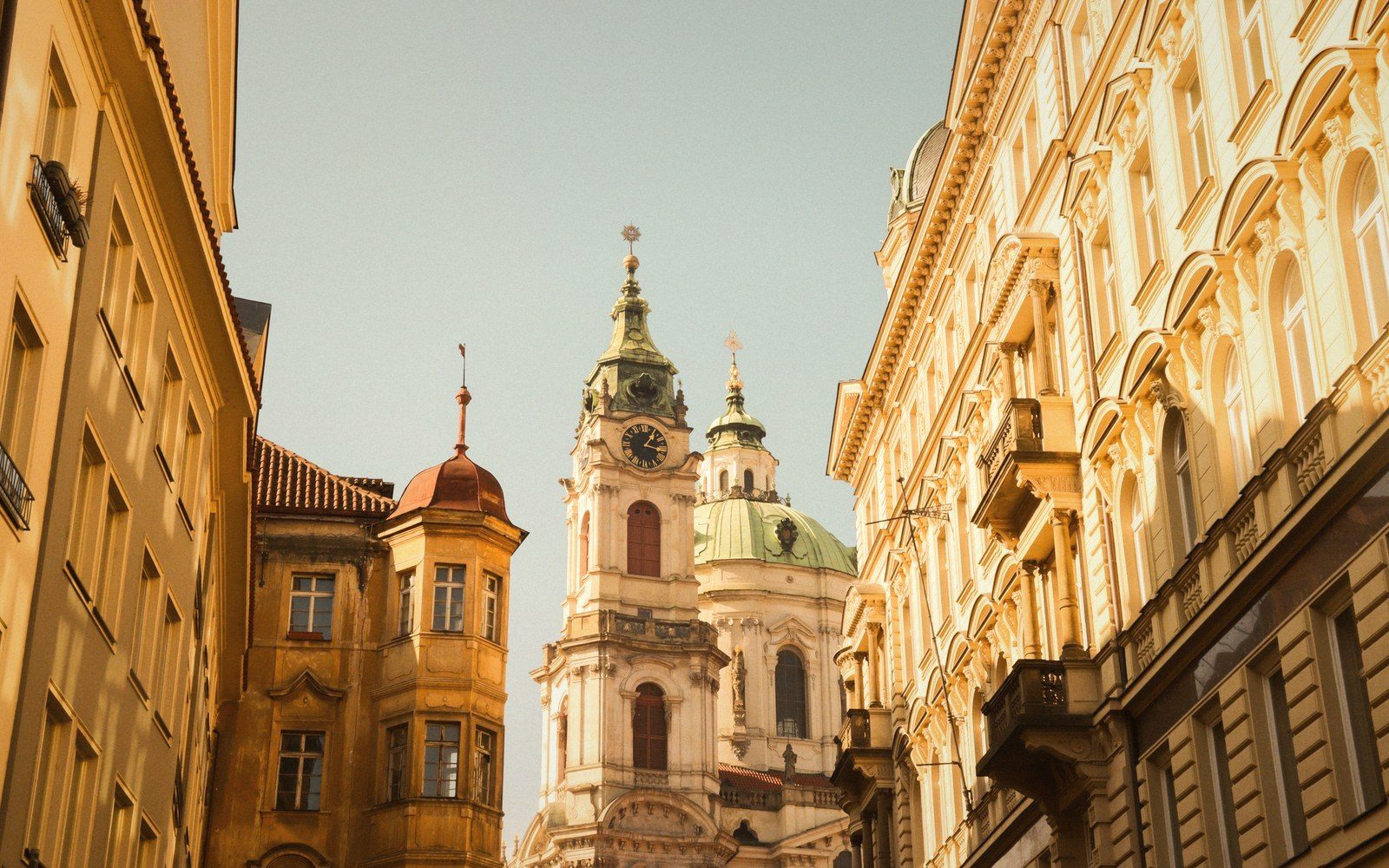
He planned departures for decades. He stayed.
Prague as Prison, Prague as Ground
The letters and diaries are full of escape plans. Berlin recurs most insistently — Kafka wrote about it, negotiated toward it, and eventually, in the autumn of 1923, actually reached it, living there with Dora Diamant until illness forced a return in the spring of 1924. Palestine appears in the later years, bound up with his interest in the Zionist movement and the Hebrew lessons he was still taking near the end of his life. Vienna, Munich, even a vague agricultural life somewhere unspecified. What the plans share is not a destination but a direction: away from Prague, away from the parental apartment at the Old Town Square, away from a city where, as he complained to friends and correspondents, he felt simultaneously rooted and suffocated.
The complaint was real. So was the staying. For most of his adult life Kafka remained within a few hundred metres of where he was born, walking the same streets between the family home, the Old Town Square, and the Workmen's Accident Insurance Institute where he spent his working days. The geography barely changed across decades.
What the letters resist, and what any honest account of Kafka should resist too, is a single explanation for this. The obvious candidates — the father, the cost, the illness, the attachment to German-speaking literary life in Prague — each contain some truth and none is sufficient. The diaries record the paralysis without diagnosing it, as if Kafka were as genuinely puzzled by his own immobility as anyone reading him afterwards. A departure is planned, the plan is serious, and then — not abandoned so much as quietly not executed.
The Berlin months are worth holding onto precisely because they happened. They were not a fantasy. Kafka was forty years old, seriously ill, and he went. That the tuberculosis returned and forced him back does not cancel the departure; it complicates any story in which Prague simply held him by invisible chains. He managed to leave. He was brought back by his body rather than by the city.
What remains after that correction is a more honest picture: a man in genuine, unresolved tension with the place that formed him, capable of leaving and incapable, most of the time, of leaving. The tension is not a metaphor for anything. It is what the documents show.
End of article · Prague