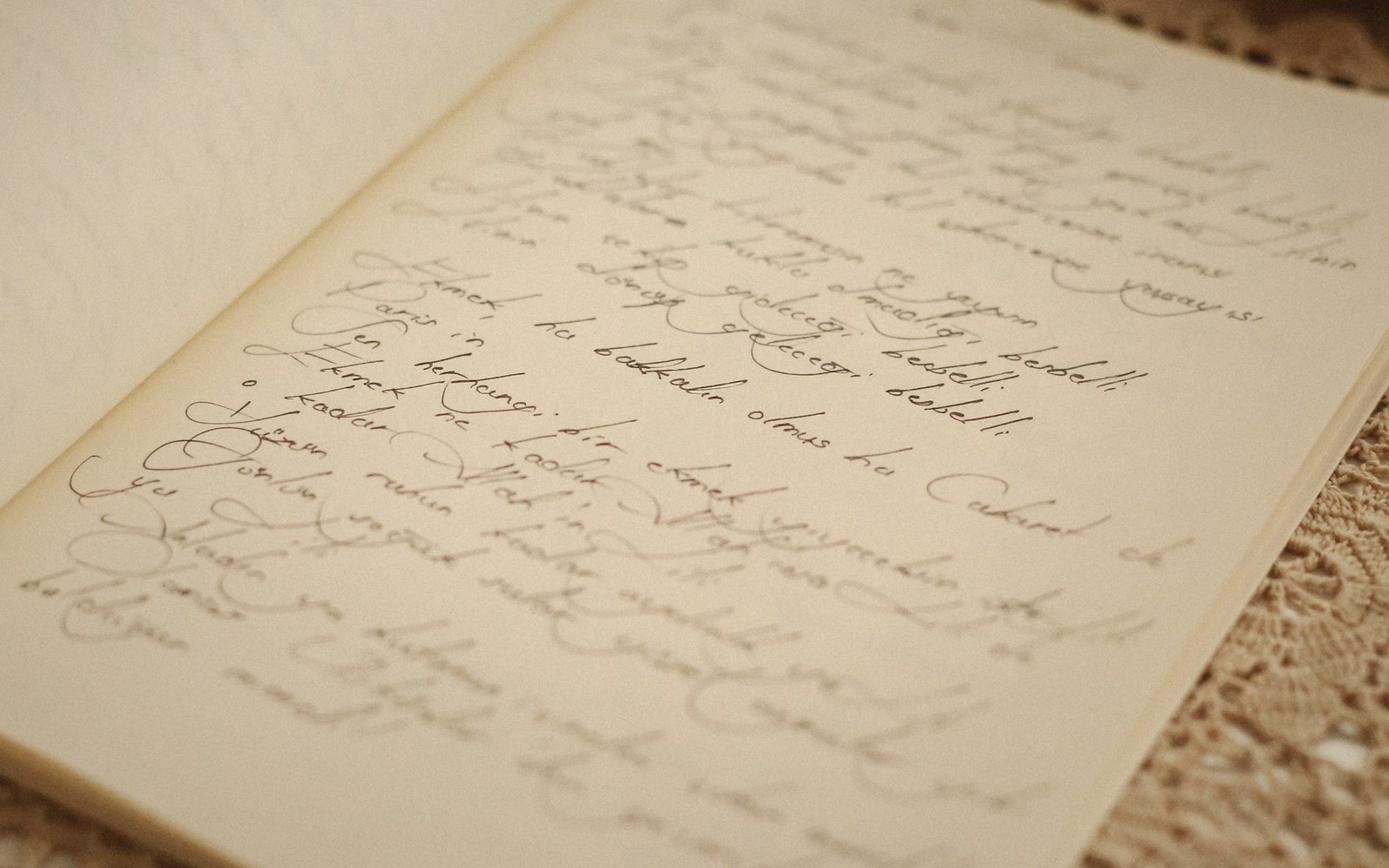
Kafka's notebooks are not a window into the man behind the fiction — they are something stranger and more resistant than that.
A Different Kind of Document
The diaries Kafka kept from 1910 until 1923, the year before his death in 1924 are routinely mined for biographical confession and psychological clue. Scholars and readers alike treat them as a hinterland to the novels — raw material, unguarded feeling, the man behind the mask. The notebooks resist this use at almost every turn.
What they actually contain is a great deal of failed fiction. Whole passages begin as narrative attempts that stall mid-sentence, sometimes mid-word, and are never resumed. Character sketches appear, gather momentum, and stop. The entries dated November 1911, for instance, move within a single page between self-observation, a half-finished scene involving strangers on a train, and a flat notation about office hours. No single mode dominates. There is no reliable confessional register — the voice that seems to be Kafka speaking plainly about his own misery is often only a few lines from a voice clearly inhabiting a fictional persona.
The introspective passages that get quoted most widely — on writing as a form of prayer, on the impossibility of happiness, on the relationship between his body and his work — are genuinely in the notebooks, but they sit embedded in this mixed, provisional texture rather than rising cleanly from it. To excerpt them is to make them more coherent, more aphoristic, than they are on the page.
The diaries are, in the end, a writer's working document: a place where language was tested, where the problem of beginning was rehearsed daily, and where self-analysis and narrative drafting were not yet separated into different acts. Reading them as confession flattens precisely what is most interesting about them.
End of article · The Letters