A document that chose its own genre
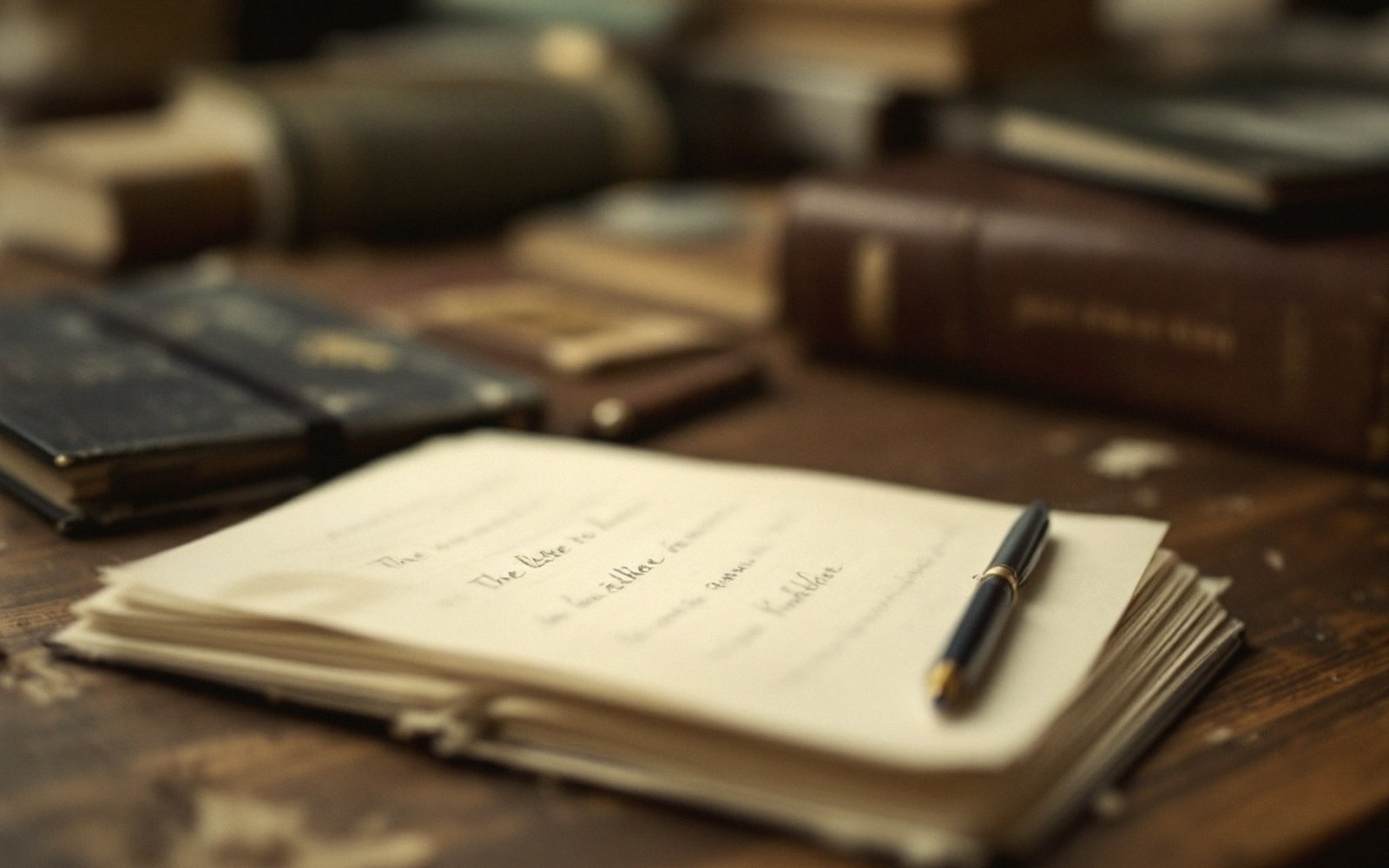
In late 1919, Kafka wrote a letter to his father. It ran to roughly forty-five pages in manuscript. Hermann Kafka never read it; the letter was handed to Kafka's mother, Julie, who gave it back to her son rather than pass it on. It remained in Kafka's papers, was preserved by Max Brod after Kafka's death in 1924, and was published in 1952 under the title Brief an den Vater — Letter to His Father in English.
The opening move is worth taking seriously. Kafka begins by acknowledging what he suspects his father will say: that he has not suffered at the hands of his son, that the complaint runs the other way. He then attempts something formally unusual — he stages Hermann's anticipated counter-argument at length, in Hermann's own imagined voice, only to qualify it afterward. The result is a text that builds its own opposition into itself, which is not quite what a letter does and not quite what an essay does. Calling it a confession or a psychological document flattens it. Calling it fiction overreaches. It sits in its own category, and that indeterminacy is part of what makes it interesting and part of what makes it treacherous as a biographical source.
What it argues, and what that is not
The Brief constructs Hermann Kafka as an overwhelming physical and psychological presence — loud, self-certain, contemptuous of weakness, whose judgments arrived as verdicts rather than opinions. It traces the son's timidity, his inability to marry, his discomfort with his body, his sense of unworthiness, through this paternal shadow. The argument is cumulative, methodical, almost forensic.
But the letter is an argument, not a transcript. Kafka is selecting, arranging, interpreting. He says at one point, with unusual directness, that he is aware his account is one-sided. That acknowledgment does not dissolve the problem; it names it. We have no comparable document from Hermann's side — no letters, no memoir, no recorded testimony. What we have is a son's highly organized account, written at a moment of particular personal difficulty, by a man who was also one of the finest prose stylists of the twentieth century. The skill that makes the Brief compelling is exactly the skill that should make us careful about treating it as evidence.
The biographical record does support some of what the letter claims in outline — the household in the Old Town of Prague, the father's business success and dominance, the son's repeated failed engagements, the years of strained coexistence in the same apartment. But the Brief goes far beyond outline. It builds a theory of causation, and theories of causation, however intelligently assembled, are not the same as facts.
The text that stayed
There is something worth dwelling on in the letter's fate: it was written to be sent, was not sent, and yet was kept. Kafka kept a great deal — he kept the diaries, the drafts, even the fragments — and his instructions to Max Brod to destroy the unpublished work after his death complicate any simple reading of what preservation meant to him. Whether Kafka intended his mother to deliver the letter, or hoped she would hand it back, is not recorded. He left no explanation.
What was preserved is a document that cannot resolve the relationship it describes, was not designed to resolve it, and probably knew this. It is addressed to someone who would not receive it, making its reader — any reader since 1952 — an inadvertent third party. That position is worth inhabiting carefully: close enough to hear the argument, far enough not to rule on it.
End of article · The Letters