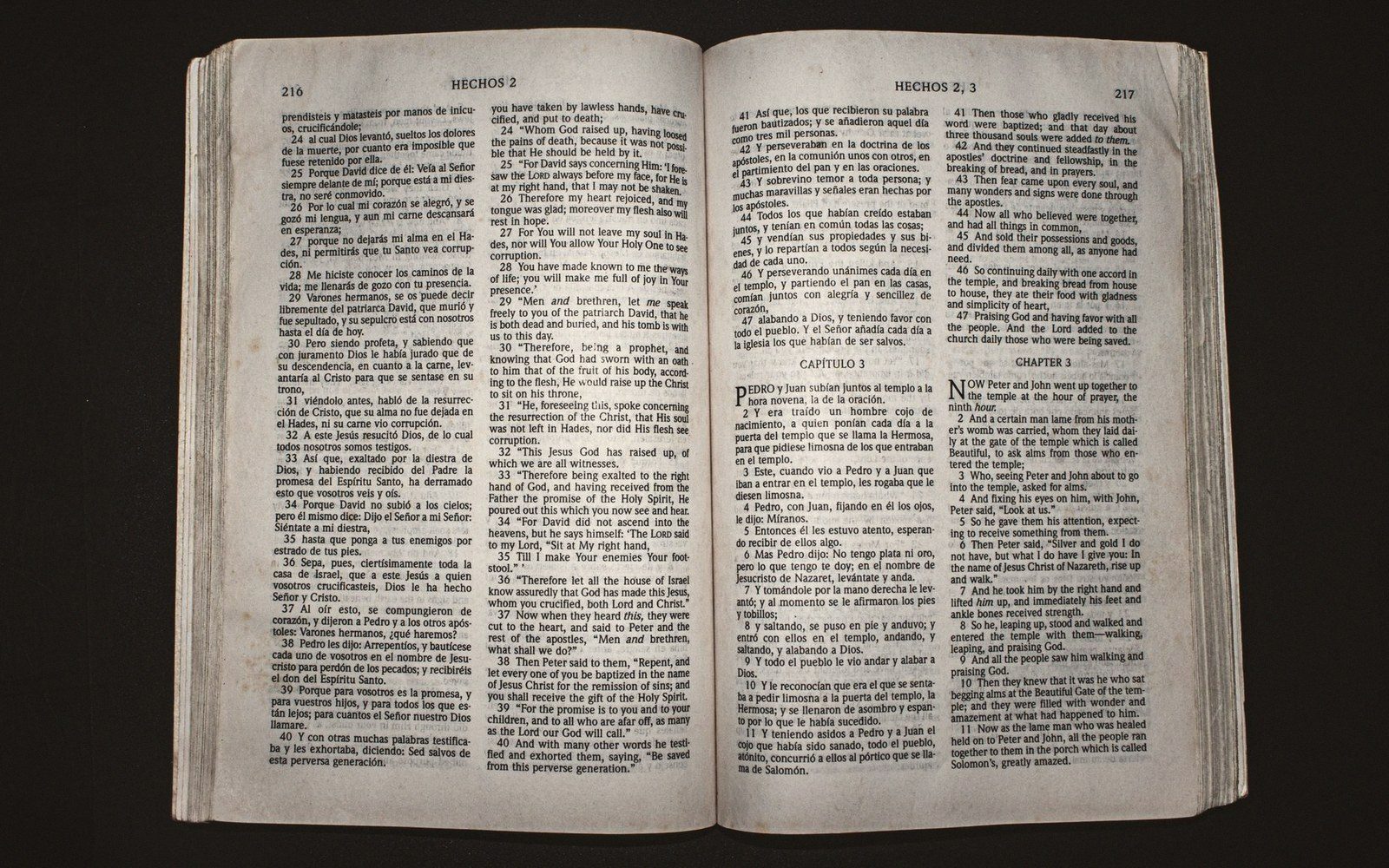
Four translators face the same German sentence and come back with four different Gregor Samsas.
The Sentence Itself
The opening sentence of Die Verwandlung — published in 1915, and usually translated into English as The Metamorphosis — is among the most discussed single sentences in European fiction. In German it reads: Als Gregor Samsa eines Morgens aus unruhigen Träumen erwachte, fand er sich in seinem Bett zu einem ungeheueren Ungeziefer verwandelt. That is roughly: when Gregor Samsa woke one morning from uneasy dreams, he found himself transformed in his bed into a monstrous Ungeziefer. But that "roughly" is the entire problem.
The sentence is not grammatically difficult. A competent German student can parse it in under a minute. What makes it a sustained translation problem is not complexity but precision: Kafka chose every word with evident care, and several of those words carry meanings that standard English equivalents quietly discard. The comparison that follows looks at four published translations — by Willa and Edwin Muir (1933), Stanley Corngold (1972), Michael Hofmann (2007), and Susan Bernofsky (2014) — and uses that single sentence as a lens. The aim is not to rank the translations but to see exactly what each chooses to gain and what it accepts losing.
Four Versions
Willa and Edwin Muir (1933): "As Gregor Samsa awoke one morning from uneasy dreams he found himself transformed in his bed into a gigantic insect."
The Muirs' version set the terms for anglophone readers for decades. Their work, published by Secker & Warburg and then widely distributed through Schocken Books, shaped an entire generation's encounter with Kafka, and several of their choices calcified into casual assumption. The most consequential is "gigantic insect." The German ungeheuer (used here adjectivally, from the noun Ungeheuer, meaning monster) becomes "gigantic," which preserves the sense of scale but drops the monstrousness — the genuine otherness that "ungeheuer" carries in German beyond mere physical size. More seriously, Ungeziefer — a word that resists any single English equivalent because it denotes an unclean creature unfit for sacrifice, without specifying a species — becomes "insect." That is a decision with consequences. An insect is a zoological category; it creates a specific mental image. Kafka's word deliberately refuses that specificity. The Muirs' sentence is elegant, smooth, readily absorbed — and that very smoothness is its cost.
Stanley Corngold (1972): "When Gregor Samsa woke up one morning from unsettling dreams, he found himself changed in his bed into a monstrous vermin."
Corngold, whose translation appeared alongside his influential critical commentary on the story, pushes back against the Muirs at the word that matters most. "Monstrous vermin" is a genuine attempt to hold both sides of ungeheueres Ungeziefer — the wrongness of scale and the wrongness of kind, together with the cultural uncleanness the word implies. "Vermin" is not a zoological category; it is a relational one, denoting animals that are unwanted, threatening, or contaminating to humans. It keeps Kafka's refusal to specify while adding a social charge — which is arguably already present in Kafka's German. The shift from "uneasy" to "unsettling" is minor but worth noting: "unsettling" is slightly more active, suggesting that something in the dreams did the unsettling, whereas "uneasy" places the quality in Gregor himself. "Changed" rather than "transformed" is flatter, less dramatic — perhaps deliberately so, hinting at the story's strange tonal flatness, its refusal to treat the metamorphosis as shocking. Corngold's sentence is the most discussed in the scholarly literature, partly because the accompanying essay made the word choices themselves arguments.
Michael Hofmann (2007): "When Gregor Samsa awoke one morning from troubled dreams, he found himself changed into a monstrous cockroach in his bed."
Hofmann's version, published by Penguin Modern Classics, keeps "monstrous" and, like Corngold, uses "changed" — but then makes a much-discussed choice: "cockroach." Where Kafka's Ungeziefer refuses to name a species, "cockroach" names one outright, going even further than the Muirs' "insect" toward a specific mental image. The gain is immediacy: every reader can picture the creature, and the word carries a familiar, domestic disgust. The cost is the indefiniteness that Kafka's word seems to protect. Hofmann also moves "in his bed" to the end of the sentence, where it lands almost as an afterthought. "Troubled dreams" for unruhigen Träumen is a reasonable choice — unruhig in German means restless, unsettled, troubled — and is perhaps marginally more vivid than "uneasy" while less clinical than "unsettling."
Susan Bernofsky (2014): "When Gregor Samsa woke one morning from troubled dreams, he found himself transformed right there in his bed into some sort of monstrous vermin."
Bernofsky's translation, published by Norton, has attracted notice for one addition: "right there." The German in seinem Bett — in his bed — becomes "right there in his bed." "Right there" is not in Kafka's sentence. Bernofsky has said that the addition is meant to convey a quality of the German she finds present in the syntax: a colloquial exactness, an almost incredulous specificity about location. Gregor's situation is already absurd; the "right there" heightens the comedy of the precise detail at the moment of surreal discovery. Some readers find this brilliant. Others — including translators who have commented publicly on the passage — read it as an intrusion, a translator's editorial voice entering a sentence that, in Kafka's German, is deliberately without affect. "Some sort of monstrous vermin" is the other notable choice: "some sort of" for the German indefinite article and adjective combination reinstates what Bernofsky sees as an indefiniteness in the original — the creature is not classified, is barely named. It also has a colloquial flatness that may be precisely the point.
What the Differences Reveal
Laid side by side, the four sentences illuminate three distinct pressure points. The first is the creature itself: insect (specific, wrong), vermin (relational, contested), cockroach (specific, domestic), some sort of monstrous vermin (indefinite, verbally cautious). Each position is a theory of what Kafka was doing when he chose Ungeziefer. The second pressure point is the quality of the dreams: uneasy, unsettling, troubled — small variations that together suggest no English word sits perfectly on unruhig, and that each translator's choice tells you something about what they hear in the German. The third, most visible in Bernofsky's version, is the question of register: is the sentence affectless and austere, or is it gently, horribly comic? Can it be both, and does an English sentence let it?
None of this is a dispute about error. The Muirs were not careless; Corngold was not overcorrecting for sport; Hofmann and Bernofsky are not simply trying to be different. Each version is a reading, a position taken in full awareness of the alternatives. The sentence is short enough that the choices are starkly visible — which is precisely why translators and scholars return to it. A longer passage would let differences blur and accumulate more quietly. This sentence holds every choice up to the light.
What the comparison finally demonstrates is not that translation is impossibly difficult but that it is irreducibly interpretive. There is no neutral conveyance from one language to another; the translator makes claims about tone, register, cultural weight, and the kind of attention the reader should bring. Four translators — all of them serious, all of them knowledgeable — disagreed about what Kafka's first sentence is for. That disagreement is not a failure of the discipline. It is the discipline working exactly as it should.
End of article · Translating Kafka